
Introduction
Writing has changed more in the last few years than it did in decades. What used to take hours—or even days can now be done in minutes with artificial intelligence.
But this raises a big question:
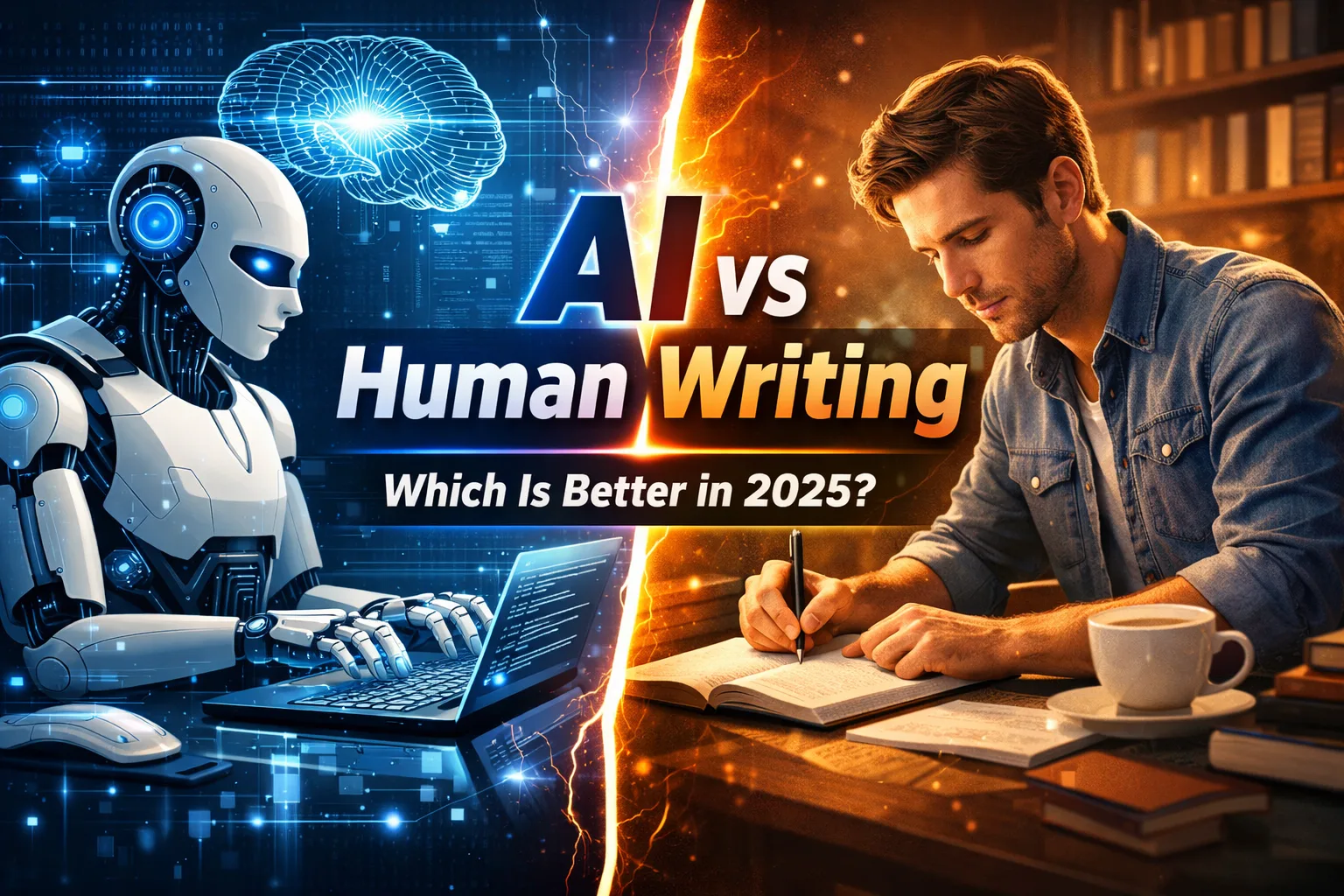
Is AI writing better than human writing in 2026?
The truth is not as simple as choosing one over the other. Both AI and human writing have strengths and weaknesses, and understanding them can help you use each one effectively.
In this guide, we’ll break it down in a simple, honest, and practical way so you can decide what works best for you.
What Is AI Writing?
AI writing uses artificial intelligence tools to generate content based on prompts. These tools can create:
- Blog posts
- Emails
- Social media captions
- Scripts and more
AI is fast, efficient, and always available but it doesn’t think or feel like a human.
What Is Human Writing?
Human writing comes from personal experience, emotions, creativity, and real-life understanding.
It includes:
- Storytelling
- Opinions
- Unique perspectives
This is what makes human writing authentic and relatable.
AI Writing vs Human Writing: Key Differences
1. Speed and Efficiency
AI Writing:
AI can generate content in seconds. What might take a human hours can be done almost instantly.
Human Writing:
Humans take more time because they think, research, and refine.
👉 Winner: AI
2. Creativity and Emotion
AI Writing:
AI can imitate creativity, but it doesn’t truly feel emotions.
Human Writing:
Humans bring real-life experiences, emotions, and depth.
👉 Winner: Human
3. Accuracy and Consistency
AI Writing:
AI is consistent but can sometimes give incorrect or outdated information.
Human Writing:
Humans can fact-check and apply judgment.
👉 Winner: Human (when done properly)
4. SEO and Optimization
AI Writing:
AI can structure content for SEO quickly and effectively.
Human Writing:
Humans may need more effort but can create more meaningful content.
👉 Winner: AI (for speed), Human (for depth)
5. Personal Connection
AI Writing:
Can sound generic if not edited.
Human Writing:
Builds emotional connection and trust.
👉 Winner: Human
Pros and Cons of AI Writing
✅ Pros
- Fast content creation
- Saves time
- Great for beginners
- Helps overcome writer’s block
❌ Cons
- Can sound robotic
- Lacks real emotion
- May require editing
- Risk of inaccuracies
Pros and Cons of Human Writing
✅ Pros
- Authentic and emotional
- Unique voice
- Builds trust
- More creative
❌ Cons
- Time-consuming
- Can be difficult for beginners
- Requires skill and experience
So, Which One Is Better in 2026?
Here’s the honest answer:
👉 Neither is better alone. The real power is in combining both.
AI helps you:
- Start faster
- Generate ideas
- Structure content
Humans help you:
- Add personality
- Build connection
- Ensure quality
The Best Strategy: AI + Human Writing
Instead of choosing one, use both.
Step-by-Step Approach:
- Use AI to generate ideas and drafts
- Edit and humanize the content
- Add personal insights
- Optimize for SEO
- Publish
This is what most successful bloggers and creators are doing in 2026.
Real-Life Example
Let’s say you want to write a blog post:
- AI creates the draft in minutes
- You edit it, add your tone and examples
Final result: fast + human + high-quality
👉 That’s the winning formula.
Why This Topic Matters in 2026
AI is becoming part of everyday life. Writers, bloggers, students, and businesses are all using it.
Understanding how to use AI the right way gives you a huge advantage.
5 Major Reasons We Cannot Avoid AI Support in Human Writing
1. Speed and Productivity
AI helps writers produce content much faster than traditional methods. What used to take hours or days can now be done in minutes, allowing writers to focus more on ideas and improvement rather than starting from scratch.
2. Idea Generation and Inspiration
Many writers struggle with writer’s block. AI helps generate topics, outlines, and fresh ideas, making it easier to start and maintain the writing process.
3. Better Content Structure
AI can organize content into clear headings, sections, and logical flow. This improves readability and helps writers create more professional and well-structured articles.
4. SEO Optimization
In 2026, online visibility is very important. AI tools help optimize content for search engines by suggesting keywords, improving readability, and enhancing overall ranking potential.
5. Accessibility for Everyone
AI makes writing easier for beginners, students, and non-native speakers. It removes barriers and allows more people to express their ideas clearly and professionally.
How does AI actually improve the speed and quality of human writing.
AI improves the speed and quality of human writing in 2026 in several important ways:
1. Faster Content Creation
AI can generate drafts, outlines, and full articles in seconds or minutes. This saves writers a lot of time that would normally be spent starting from scratch.
2. Instant Idea Generation
When writers are stuck, AI provides topic ideas, headlines, and content suggestions quickly, helping them continue writing without delay.
3. Better Structure and Organization
AI helps arrange content into clear sections, headings, and logical flow, making the writing easier to read and more professional.
4. Grammar and Error Correction
AI tools detect spelling mistakes, grammar issues, and unclear sentences, improving the overall quality of the writing.
5. SEO Optimization
AI helps optimize content with keywords, readability improvements, and formatting strategies that make the content rank better on search engines.
👉 In summary: AI increases speed by automating writing tasks and improves quality by refining structure, clarity, and optimization while humans still add creativity and emotion.
In what ways can AI help writers overcome writer’s block and generate new ideas?
AI helps writers overcome writer’s block and generate new ideas in several practical ways:
1. Instant Topic Suggestions
AI can quickly generate blog topics, titles, and angles based on a keyword or subject, helping writers know exactly what to write about.
2. Content Outlines
When a writer doesn’t know how to start, AI can create a structured outline with headings and subheadings, making the writing process easier to follow.
3. Prompt-Based Inspiration
By simply entering a short idea or question, AI can expand it into multiple directions, giving writers fresh perspectives and creative paths.
4. Brainstorming Variations
AI can generate multiple versions of a headline, introduction, or paragraph, helping writers choose the best option or combine ideas.
5. Filling Knowledge Gaps
AI can quickly provide background information, explanations, or examples, making it easier for writers to develop ideas even on unfamiliar topics.
👉 In summary: AI removes the pressure of starting from zero by acting as a creative partner that continuously supplies ideas, structure, and inspiration.
Can human writing still remain authentic while using AI tools for support? Why or why not?
Yes human writing can still remain authentic while using AI tools for support, and here’s why:
1. Authenticity comes from the writer, not the tool
AI may help generate words, but the ideas, opinions, and final message still come from the human writer. Your voice, experience, and perspective are what make the content authentic.
2. Editing adds human personality
When writers review and refine AI-generated content, they can adjust tone, add emotions, personal stories, and real-life examples that AI cannot naturally create.
3. AI is only a starting point
Most writers use AI for drafts, outlines, or inspiration. The final version is shaped by human judgment, creativity, and intent.
4. Personal experiences cannot be replaced
AI has no real-life experience. When humans add their own stories, opinions, and insights, the writing becomes unique and genuine.
5. Intent defines authenticity
If the goal is to communicate honestly and meaningfully, then using AI as a tool does not remove authenticity it enhances productivity while keeping human meaning at the center.
👉 In summary: Human writing remains authentic when the human is still in control of the ideas, emotions, and final message even if AI is used to assist in the process.
Final Thoughts
AI is not here to replace human writers—it’s here to support them.
The future of writing is not AI vs humans.
👉 It’s AI working with humans.
If you learn how to combine both, you’ll not only write faster you’ll write smarter.