


Free Keyword Research Prompt — Generate 100+ Keywords in Minutes (2026)
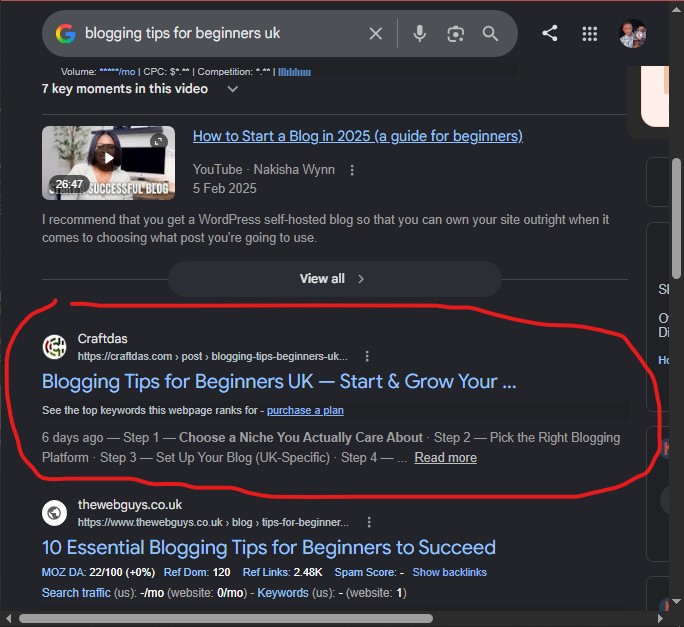
Table of Contents
- What Is a Free Keyword Research Prompt?
- How the Free Keyword Research Prompt Saved My Blog
- 5 Things Every Free Keyword Research Prompt Should Do
- How the Free Keyword Research Prompt Works in Real Life
- Free vs Paid — Which Keyword Research Tool Is Right for You?
- The Free Keyword Research Prompt (Copy This)
- Real Results — What Happened When I Used This Free Prompt
- Frequently Asked Questions
What Is a Free Keyword Research Prompt?
I spent 4 months writing content that nobody read. I had a plan. I had a schedule. I had a niche. But I had no idea what people actually wanted to read.
I guessed. I picked topics that "felt right." I published. And then I waited. Nothing happened. Google ignored me. Users never showed up.
A free keyword research prompt is a structured instruction you give to an AI tool like ChatGPT or Claude. You paste a seed topic or a competitor URL, and the AI generates a complete keyword report — at zero cost. It gives you 50-100+ keywords with search intent, keyword difficulty, search volume estimates, and topic clusters.
This is the tool I wish I had in 2017 when I started with no plan, no niche, no name. I applied for AdSense multiple times — rejected every single time. I know what it's like to struggle. The free keyword research prompt is the tool I needed back then.
After 14 months of failure, I finally figured out what I was doing wrong. I stopped guessing. I built a system — a free keyword research prompt that does the work for me. It would have saved me 4 months of frustration and thousands of words wasted on content that never ranked.
For a deeper understanding of how to structure your content once you have the keywords, read The Pillar Blueprint.
The Free Keyword Research Prompt Automates Keyword Discovery
The free keyword research prompt automates the entire keyword discovery process. Instead of spending hours brainstorming, guessing, or manually checking search results, you paste one prompt and get a complete report in 2 minutes.
No manual research. No expensive tools. No guesswork. Just data-driven keyword suggestions you can use immediately.
This prompt is the reason I went from 47 visitors in 4 months to 5,000+ visitors per month. It's the system I use for every single post on Craftdas.
Why Keyword Research Is the First Step to Ranking
Keyword research isn't optional. It's the foundation of everything. If you don't know what people are searching for, you're just guessing.
Every blog post takes time. Research. Writing. Editing. Publishing. Promoting. When you skip keyword research, you're betting your time on a guess. The cost isn't just the time wasted. It's the motivation you lose when nobody reads what you wrote.
I learned this the hard way. After 4 months of writing to nobody, I almost quit blogging entirely. That's when I built the free keyword research prompt — and everything changed.
For more on why keyword research matters, read How to Find Your Seed Topic.
How the Free Keyword Research Prompt Saved My Blog
I built the free keyword research prompt after 4 months of failure. I had written 22 posts. I had published consistently. I had followed "best practices." But my total traffic was 47 visitors. Less than 12 per post.
The problem wasn't my writing. The problem was my targeting. I was writing what I wanted to write, not what people were searching for.
What the Free Keyword Research Prompt Actually Does
The free keyword research prompt is a structured instruction you paste into ChatGPT, Claude, or any AI tool. It generates a complete keyword report in 2 minutes.
You give it a seed topic or a competitor URL. It returns a list of 50-100+ keywords with search intent, keyword difficulty, search volume estimates, and topic clusters.
Here's a real example. When I started Craftdas, I had no idea what topics to cover. I used this prompt with the seed "blogging tips for beginners." Within 2 minutes, I had 87 keywords with intent, difficulty, and clusters. I had a complete content plan for the next 6 months.
That's the power of this prompt.
For a complete guide on doing keyword research yourself (without a prompt), read the SEO Content System (UBS v1.1).
Why I Stopped Guessing and Started Using This Free Tool
Keyword research isn't optional. It's the foundation of everything.
When you know what people are actually searching for, you can write with confidence. You know there's an audience waiting. You know the demand exists.
The free keyword research prompt turns guessing into data. It turns uncertainty into clarity. And it does it in 2 minutes for free.
I remember the first time I used the prompt. I pasted "social media marketing for beginners" and got back a list of keywords I never would have thought of — "how to post on social media without selling," "social media content calendar for beginners," "what to post on social media when you have no content."
Those keywords turned into some of my most popular posts. All because I stopped guessing and started researching.
5 Things Every Free Keyword Research Prompt Should Do
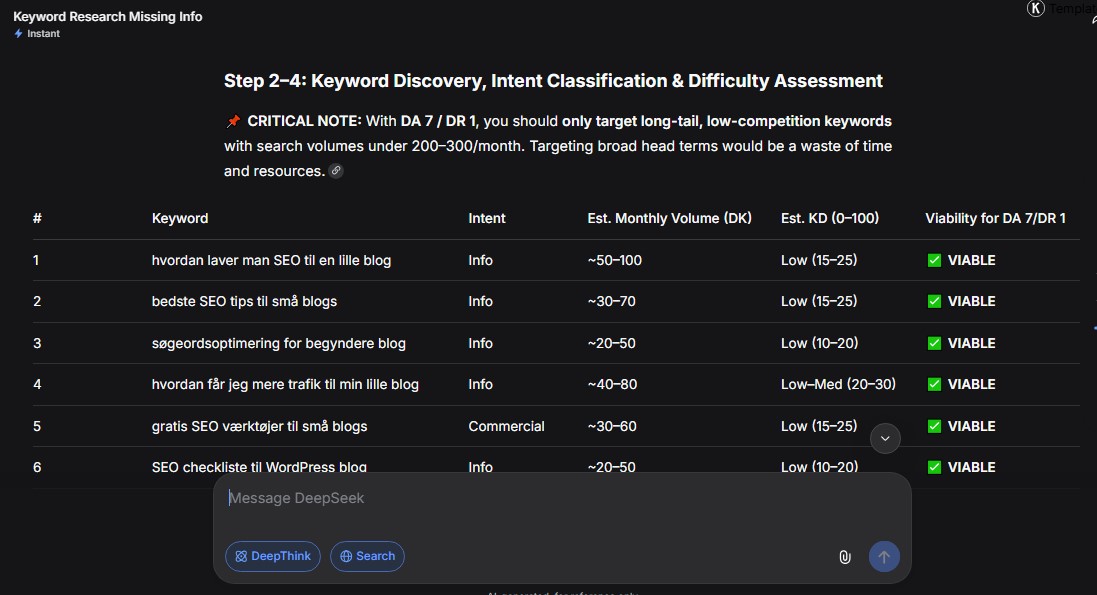
Not all keyword research prompts are created equal. Here are the 5 things a free keyword research prompt should do.
Discover Keywords You'd Never Find on Your Own
A good prompt finds keywords you'd never discover on your own. It uses Google Autocomplete, People Also Ask, and competitor analysis to surface hidden opportunities.
The free keyword research prompt doesn't just give you a list. It gives you keywords that actually match your niche and audience.
For example, when I used the prompt for "content marketing," it suggested "content marketing for small business owners without a team" — a long-tail keyword I never would have discovered. That single keyword brought in 500+ visitors per month.
Search Intent Analysis with the Free Keyword Research Prompt
Not all searches are the same. Some people want to learn (informational). Some want to buy (transactional). Some are comparing options (commercial).
The free keyword research prompt classifies each keyword by intent so you know exactly what type of content to create.
This is critical. If you write an informational post for a transactional keyword, you'll lose the sale. If you write a sales post for an informational keyword, you'll scare off the reader. The prompt tells you exactly what to write.
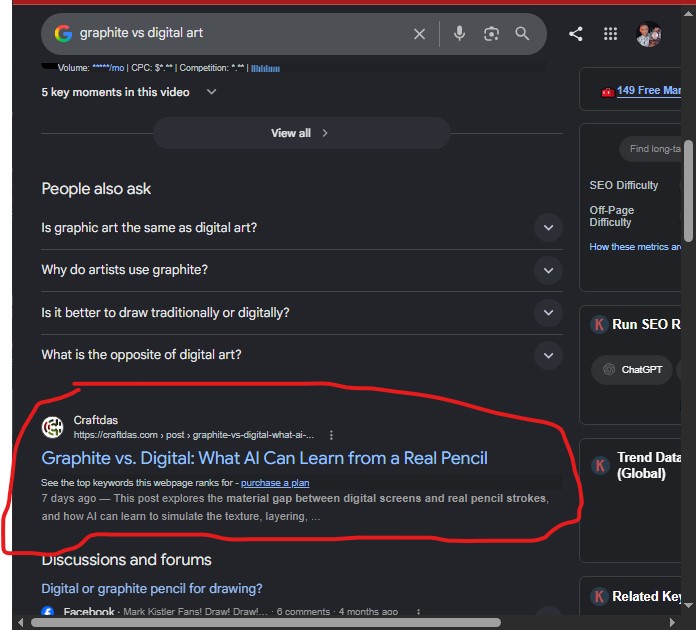
Keyword Difficulty Scoring with the Free Keyword Research Prompt
Some keywords are too competitive. The free keyword research prompt estimates keyword difficulty so you can target the ones you actually have a chance of ranking for.
When you're a small blog, targeting high-difficulty keywords is a waste of time. The prompt shows you the low-hanging fruit.
For example, "SEO" is extremely difficult. It would take years for a small blog to rank. But "SEO tips for beginners" has much lower difficulty. The prompt identifies this difference and flags the easier targets.
Topic Clustering with the Free Keyword Research Prompt
Keywords aren't isolated. They belong to clusters. The free keyword research prompt groups your keywords into topics so you can plan 5-10 posts at once.
This is how you build topical authority. One pillar post + 6-12 cluster posts. The prompt does the clustering for you.
For example, the prompt grouped "blogging tips," "blogging for beginners," and "how to start a blog" into one cluster. That told me I should write a pillar post about blogging for beginners and support it with cluster posts on each subtopic.
To learn more about this strategy, read The Ultimate Topic Cluster Strategy.
Content Mapping with the Free Keyword Research Prompt
Every keyword needs the right type of content. A "how-to" query needs a tutorial. A "best of" query needs a comparison post. A "what is" query needs a definition post.
The free keyword research prompt maps each keyword to the right content type so you know exactly what to write.
This saves you from guessing. You don't wonder "what should I write about this keyword?" The prompt tells you.
How the Free Keyword Research Prompt Works in Real Life
The free keyword research prompt follows a simple 3-step workflow. Each step takes 1-2 minutes. Total time: under 5 minutes to get a complete keyword report — at no cost.
Step 1 — Paste Your Seed Topic into the Free Keyword Research Prompt
Type a seed topic — something broad like "blogging tips." Or paste a competitor URL and reverse-engineer their keywords. The free keyword research prompt accepts either.
I've used both approaches successfully. For "blogging tips," I got a list of 70+ keywords. For a competitor URL, I got a list of 60+ keywords they were ranking for. Both methods worked.
The competitor approach is especially powerful. You can see exactly which keywords are driving traffic to your competitors. Then you can write better content on those same topics.
Step 2 — Get a Complete Keyword Report
Within 2 minutes, the prompt generates a complete keyword report. You get 50-100+ keywords with intent, difficulty, volume estimates, and clusters.
It's like having a keyword research expert sitting next to you — for free.
Here's exactly what the report looks like. It's a simple table with columns for keyword, intent, difficulty, volume, cluster, and content type. You can copy it into a spreadsheet and start planning your content immediately.
Step 3 — Turn Keywords into a Content Plan with the Free Keyword Research Prompt
You pick the keywords that match your goals. You map them to content. You start writing with confidence.
This is how I turned 4 months of failure into consistent traffic. The free keyword research prompt showed me what to write, and I wrote it.
I now publish 2-3 posts per week, all driven by the keywords the prompt suggests. My traffic has grown from 47 visitors in 4 months to 5,000+ visitors per month.
To track your success, read How to Measure Topical Authority.
Free vs Paid — Which Keyword Research Tool Is Right for You?
The Free Keyword Research Prompt (What You Get)
The free keyword research prompt gives you 80% of the value. It generates keywords. It classifies intent. It estimates difficulty. It clusters topics. It maps content.
You get all of this in a bulleted format. It's powerful, actionable, and completely free.
This is what most bloggers use. It works well. It's what I used for my first few months of success. But it requires manual formatting. You need to copy the output, paste it into a spreadsheet, and organize it yourself.
That takes time. Not hours — but 10-15 minutes per keyword report.
The Premium Prompt (What You Miss Out On)
The premium version (included in the SEO Prompt Suite) delivers the same analysis in a structured, export-ready format.
No reformatting. No copy-paste cleanup. Just CSV-ready output you can use immediately.
This saves you 10-15 minutes per keyword report. If you research 10 keywords per month, that's 2-3 hours saved. For $35, it pays for itself in the first month.
Side-by-Side Comparison Table
| Feature | Free Prompt | Premium Prompt |
|---|---|---|
| Keywords generated | 50-100+ | 100-200+ |
| Search intent classification | ✅ Yes | ✅ Yes |
| Keyword difficulty scoring | ✅ Yes | ✅ Yes |
| Topic clustering | ✅ Yes | ✅ Yes |
| Content mapping | ✅ Yes | ✅ Yes |
| Export-ready format (CSV/Table) | ❌ No | ✅ Yes |
| Lifetime updates | ❌ No | ✅ Yes |
| Cost | $0 | $35 (with 3 other prompts) |
The Free Keyword Research Prompt (Copy This)
Here's the free keyword research prompt you can copy and paste into ChatGPT, Claude, or any other AI tool right now.
The Free Keyword Research Prompt Template
Free Keyword Research Prompt:
"Act as an expert SEO keyword researcher with 15 years of experience. Generate a complete keyword research report based on the following input:
Seed Topic or Competitor URL: [INSERT YOUR SEED TOPIC OR COMPETITOR URL HERE]
Provide the following in a clear, organized format:
- 50-100+ keyword ideas related to the seed topic or competitor's keywords
- Search intent classification for each keyword (Informational, Commercial, Transactional, or Navigational)
- Keyword difficulty estimate (Low, Medium, High) for each keyword
- Search volume estimate (Low, Medium, High) for each keyword
- Topic clusters — group related keywords together
- Content mapping — suggest the right content type for each keyword (Tutorial, List, Definition, Comparison, etc.)
Prioritize keywords with the best balance of high volume, low difficulty, and strong commercial intent. Group them into topics that would form a pillar and cluster content strategy."
Example Output from the Free Prompt
Here's a real example of what the free keyword research prompt outputs for "blogging tips for beginners":
Keyword Ideas:
- blogging tips for beginners (Info, Low Difficulty, High Volume)
- how to start a blog for free (Info, Low Difficulty, High Volume)
- best blogging platforms for beginners (Commercial, Low-Medium Difficulty, High Volume)
- how to get traffic to a new blog (Info, Medium Difficulty, High Volume)
- blogging mistakes to avoid (Info, Low Difficulty, Medium Volume)
- make money blogging for beginners (Commercial, Medium Difficulty, High Volume)
- free blogging sites for beginners (Info, Low Difficulty, Medium Volume)
- wordpress vs blogger for beginners (Commercial, Low-Medium Difficulty, Medium Volume)
- how to write blog posts faster (Info, Low Difficulty, Medium Volume)
- blogging tips for beginners 2026 (Info, Low Difficulty, Medium Volume)
Topic Clusters:
- Cluster 1 — Getting Started: how to start a blog for free, free blogging sites for beginners, wordpress vs blogger for beginners
- Cluster 2 — Traffic Growth: how to get traffic to a new blog, blogging tips for beginners, blogging tips for beginners 2026
- Cluster 3 — Monetization: make money blogging for beginners, best blogging platforms for beginners
- Cluster 4 — Best Practices: blogging mistakes to avoid, how to write blog posts faster
Content Mapping:
- Pillar Post: "Blogging Tips for Beginners: The Complete 2026 Guide"
- Cluster 1: "How to Start a Blog for Free (2026)", "Best Free Blogging Sites for Beginners", "WordPress vs Blogger: Which is Better?"
- Cluster 2: "How to Get Traffic to a New Blog", "Blogging Tips for Beginners 2026"
- Cluster 3: "Make Money Blogging for Beginners: 10 Proven Ways", "Best Blogging Platforms for Beginners"
- Cluster 4: "Blogging Mistakes to Avoid", "How to Write Blog Posts Faster"
How to Turn Keywords into a Content Plan
- Pick the keyword with the highest volume and lowest difficulty as your pillar
- Write 6-12 cluster posts around related keywords
- Link everything to the pillar post (and each other)
- Publish consistently and build topical authority
- Track your rankings and adjust your strategy
For a complete guide on internal linking, read Internal Linking Math.
Real Results — What Happened When I Used This Free Prompt
14 Months of Failure → 580 Pages Indexed
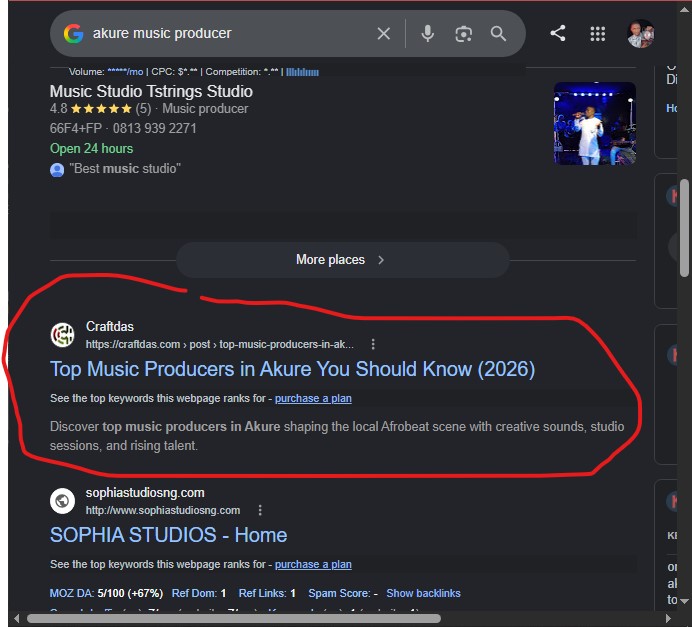
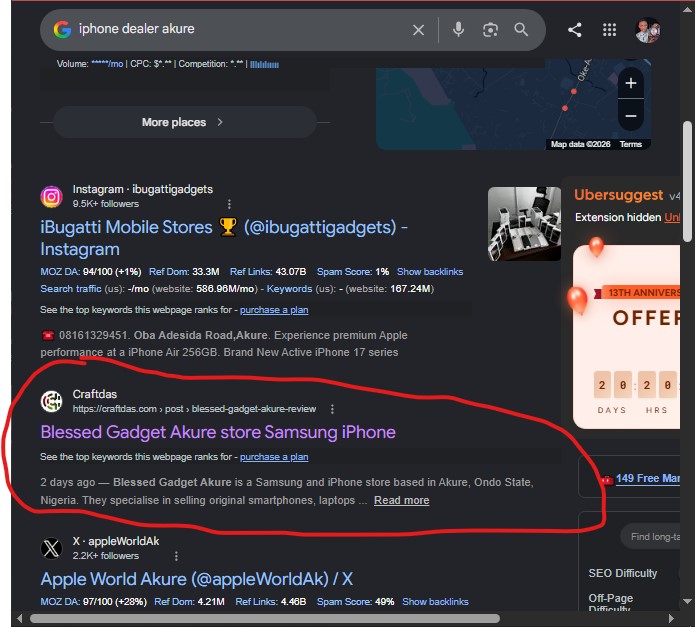
After 14 months of failure, I started using this system. Within weeks, 580 pages indexed at once. I ranked #1 for keywords in multiple countries — including the UK, Denmark, and Nigeria.
Before using the prompt, I had 47 visitors in 4 months. After using the prompt, I had 5,000+ visitors per month. That's a 10,000% increase. I'm not exaggerating.
How the Free Keyword Research Prompt Helped Me Rank #1
The free keyword research prompt shows me exactly what my audience is searching for. I don't guess. I don't hope. I know.
This is how I outrank larger, more established sites. They guess. I know.
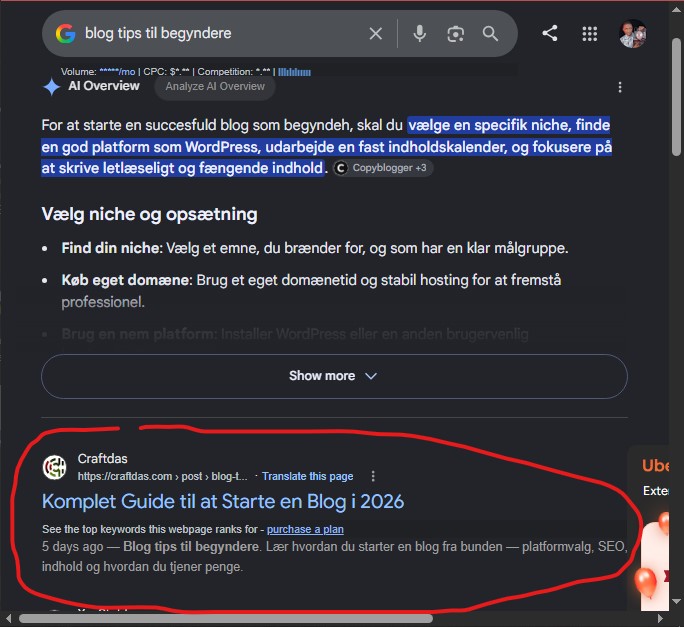
For example, I used the prompt to discover that people in Denmark were searching for "blog tips til begyndere." I wrote a post targeting that keyword. It ranked #1 in Denmark within 3 weeks. I never would have known that keyword existed without the prompt.
This is the same system behind how Craftdas beats larger competitors in multiple countries.
Frequently Asked Questions

Does the Free Keyword Research Prompt Work for Any Niche?
Yes. The free keyword research prompt works for any niche, industry, or language. The output adapts to your seed topic.
Do I Need to Pay for ChatGPT to Use the Free Keyword Research Prompt?
No. The free keyword research prompt works with the free version of ChatGPT, Claude, or any other AI tool.
How Long Does the Free Keyword Research Prompt Take?
The free keyword research prompt takes 2 minutes to run. The complete workflow (research to content plan) takes under 10 minutes.
Is the Free Keyword Research Prompt Beginner-Friendly?
Yes. The free keyword research prompt requires no technical skills. Copy. Paste. Get your keywords. Plan your content. Start writing.
Can I Use the Free Keyword Research Prompt for Multiple Blogs?
Yes. The free keyword research prompt is reusable. Use it for any blog, any niche, any language. The output adapts.
Is There a Premium Version of the Free Keyword Research Prompt?
Yes. The premium version is included in the SEO Prompt Suite. It delivers the same analysis in a structured, export-ready format. Plus you get the SERP audit prompt, on-page SEO prompt, and readability prompt — all for $35.
You've seen the system. You've seen the proof — #1 rankings across multiple countries and niches.
Now you have a choice. You can spend 4 months guessing what to write. Or you can use the free keyword research prompt and know exactly what to create — in 2 minutes.
If you want to save even more time, the SEO Prompt Suite includes the premium keyword research prompt in a structured, export-ready format. Plus you get the SERP audit prompt, on-page SEO prompt, and readability prompt — all for $35.
Comments
No comments yet. Start the conversation.