

Introduction
Creativity is powerful because it allows people to imagine, design, express, and build something meaningful. Whether you are a designer, content creator, writer, photographer, video editor, digital marketer, or freelancer, creativity gives your work identity and originality. It helps you stand out and communicate ideas in a unique way.
However, in today’s digital world, creativity alone is not always enough. Creatives now need to understand what their audience wants, how their content performs, what clients respond to, and which decisions lead to better results. This is where data becomes a creative advantage.
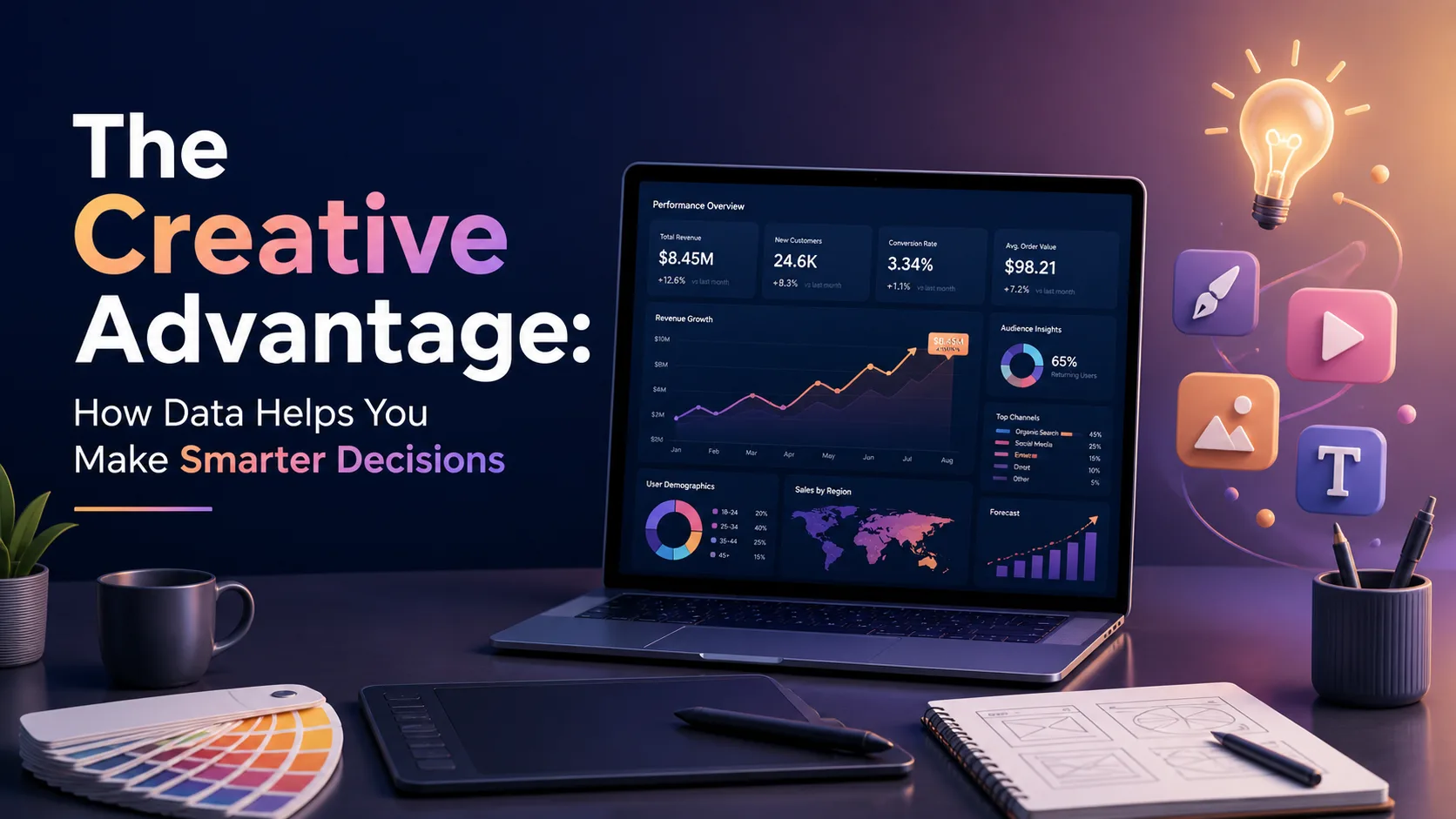
Data helps creatives make smarter decisions. It gives direction, clarity, and evidence. Instead of relying only on guesswork, creatives can use data to understand patterns, measure performance, and improve their work.
Data does not reduce creativity; it strengthens it. It helps creative professionals know where to focus their energy and how to create work that connects with people.
What Is the Creative Advantage?
The creative advantage is the ability to combine creativity with useful information. It means using your creative skills together with data-driven insights to make better decisions.
For example, a designer may use data to understand which design layout users prefer. A blogger may use analytics to know which topics readers enjoy most. A content creator may study engagement data to know what type of posts attract the most attention. A freelancer may track client inquiries to know which service is in highest demand.
In each case, data helps the creative person make decisions with more confidence.
The creative advantage is not about removing emotion, imagination, or personal style from creative work. It is about improving creative decisions by understanding what is actually working.
Why Creatives Should Care About Data
Many creatives believe data is only for analysts, businesses, or technical professionals. But data is useful for anyone who wants to grow, improve, and make better decisions.
Creatives should care about data because it helps answer important questions such as:
- What type of content does my audience enjoy?
- Which platform gives me the best result?
- What design or project attracts more attention?
- Which service brings more client inquiries?
- What topic should I write about next?
- How can I improve my personal brand?
- What should I stop doing because it is not working?
Without data, many of these questions are answered through assumptions. With data, they can be answered with evidence.
For example, you may think your audience enjoys motivational posts, but your data may show that they engage more with practical tutorials. You may think Instagram is your best platform, but your data may show that LinkedIn brings more serious clients. You may believe people visit your portfolio often, but website analytics may show that most visitors leave before viewing your projects.
Data helps reveal the truth behind creative performance.
How Data Improves Creative Decision-Making
Data improves decision-making by giving creatives a clearer picture of what is happening. It helps reduce uncertainty and makes it easier to choose the best direction.
1. Data Helps You Understand Your Audience
One of the most important benefits of data is audience understanding. Every creative work is meant for someone. A design is created for users or clients. A blog post is written for readers. A video is made for viewers. A service is offered to people who need a solution.
If you do not understand your audience, your creative work may not connect.
Data helps you know who your audience is, what they like, what they need, and how they behave. You can learn from social media analytics, website analytics, comments, surveys, feedback, and content performance.
For example, if your audience frequently saves your educational posts, it may mean they find them useful. If they share your practical guides, it may mean the content solves a real problem. If they spend more time on blog posts about Excel or analytics, it may mean they want more practical data-related content.
Understanding your audience allows you to create with purpose.
2. Data Helps You Know What Content Works
Many creatives create content regularly but do not track what performs best. They may post videos, images, articles, carousels, or tutorials without knowing which content is helping them grow.
Data helps you identify your best-performing content. You can track metrics such as views, likes, comments, shares, saves, clicks, profile visits, and engagement rate.
For example, if your content about “Excel for creatives” gets more saves than your general posts, that is an insight. It shows that your audience may value practical tool-based content. If posts showing your creative process get more comments, it may show that people enjoy behind-the-scenes content.
When you know what works, you can create more intentionally. You stop posting randomly and start building a stronger content strategy.
3. Data Helps You Improve Your Personal Brand
Your personal brand is how people recognise and remember you. It is built through your content, message, style, values, and consistency.
Data helps you understand whether your personal brand is growing. You can track profile visits, followers gained, website clicks, engagement rate, direct messages, and client inquiries.
For example, if your profile visits increase after posting educational content, it means your content is making people curious about you. If your website clicks increase after sharing case studies, it means people want to learn more about your work. If client inquiries increase after posting your services, it means your brand message is becoming clearer.
Data helps you build a personal brand that is not only attractive but also effective.
4. Data Helps You Choose the Right Platform
Not every platform works the same way for every creative. Instagram may be good for visual content. LinkedIn may be better for professional opportunities. TikTok may help with reach. YouTube may build long-term authority. A blog may bring search traffic over time.
Data helps you know which platform deserves more attention.
For example, Instagram may give you many likes, but LinkedIn may bring more clients. TikTok may give you reach, but your blog may bring more serious readers. Pinterest may bring long-term traffic to your website.
Instead of trying to be everywhere at once, data helps you focus on platforms that support your goals.
5. Data Helps You Make Better Business Decisions
For creative freelancers and business owners, data can guide business growth. You can track income, expenses, client inquiries, services, project types, and profits.
For example, you may discover that one service brings more profit than others. You may find that referrals bring better clients than social media. You may realise that a certain type of project takes too much time but brings low income.
These insights help you make better decisions about pricing, services, marketing, and business direction.
Creativity helps you create value, but data helps you understand how that value supports your business.
Practical Ways Creatives Can Start Using Data
Using data does not have to be complicated. You can start small and build gradually.
1. Track Your Content Performance
Create a simple spreadsheet using Excel or Google Sheets. Record your content title, platform, date posted, views, likes, comments, shares, saves, clicks, and notes.
After a few weeks, review the data and ask:
- Which content performed best?
- Which topic got the most engagement?
- Which format worked better?
- What should I create more of?
This simple habit can improve your content strategy.
2. Use Social Media Analytics
Most social media platforms have built-in analytics. Instagram, LinkedIn, TikTok, Facebook, YouTube, and Pinterest show useful data about your audience and content.
Pay attention to reach, engagement, saves, shares, profile visits, and follower growth. These metrics help you understand how people respond to your work.
3. Use Google Analytics for Your Blog or Website
If you have a blog, portfolio, or website, Google Analytics can help you understand visitors. It can show which pages people visit, where they come from, and how long they stay.
This helps you know which blog posts, portfolio pages, or services attract attention.
4. Collect Feedback
Data is not only numbers. Feedback from clients, comments, messages, and surveys is also useful data.
If people keep asking the same question, that question can become a blog post, service, product, or tutorial. If clients keep praising a particular skill, that skill can become part of your brand message.
5. Review Your Data Monthly
At the end of each month, review your data and write down three insights.
For example:
- My tutorial posts got the most saves.
- LinkedIn brought more profile visits than Instagram.
- Blog posts about Excel attracted more readers.
Then decide what action to take next month.
Common Mistakes Creatives Should Avoid
1. Focusing Only on Likes
Likes are easy to notice, but they do not tell the full story. Saves, shares, comments, clicks, and inquiries may show deeper value.
2. Tracking Too Many Metrics
Do not overwhelm yourself. Start with a few important metrics that connect to your goals.
3. Ignoring the Meaning Behind the Numbers
Numbers need interpretation. A post with low likes may still bring client inquiries. A blog post with fewer views may attract serious readers. Always ask what the data means.
4. Copying Trends Blindly
Data should help you understand your own audience. Do not copy what works for others without checking whether it fits your brand and audience.
5. Not Taking Action
Data is only useful when it leads to improvement. If your data shows that tutorials perform well, create more tutorials. If your website gets visits but no inquiries, improve your call-to-action.
Conclusion
Data gives creatives a powerful advantage. It helps them understand their audience, improve content, grow personal brands, choose better platforms, and make smarter business decisions.
The goal is not to replace creativity with numbers. The goal is to support creativity with insight. When creatives use data well, they stop guessing and start creating with more direction.
Creativity gives your work originality, but data gives your work clarity. When both work together, you can create stronger content, build better brands, attract better opportunities, and grow with confidence.
Comments
No comments yet. Start the conversation.