
Introduction
In today’s digital world, having talent is important, but talent alone is not always enough to stand out. Many creatives produce amazing work every day, but only a few are able to build strong personal brands that attract attention, clients, collaborations, and opportunities. This is where data becomes powerful.
A personal brand is the way people recognize, remember, and describe you based on your work, values, message, and online presence. For creatives such as designers, photographers, content creators, writers, artists, video editors, and digital marketers, a strong personal brand can help build trust and visibility.
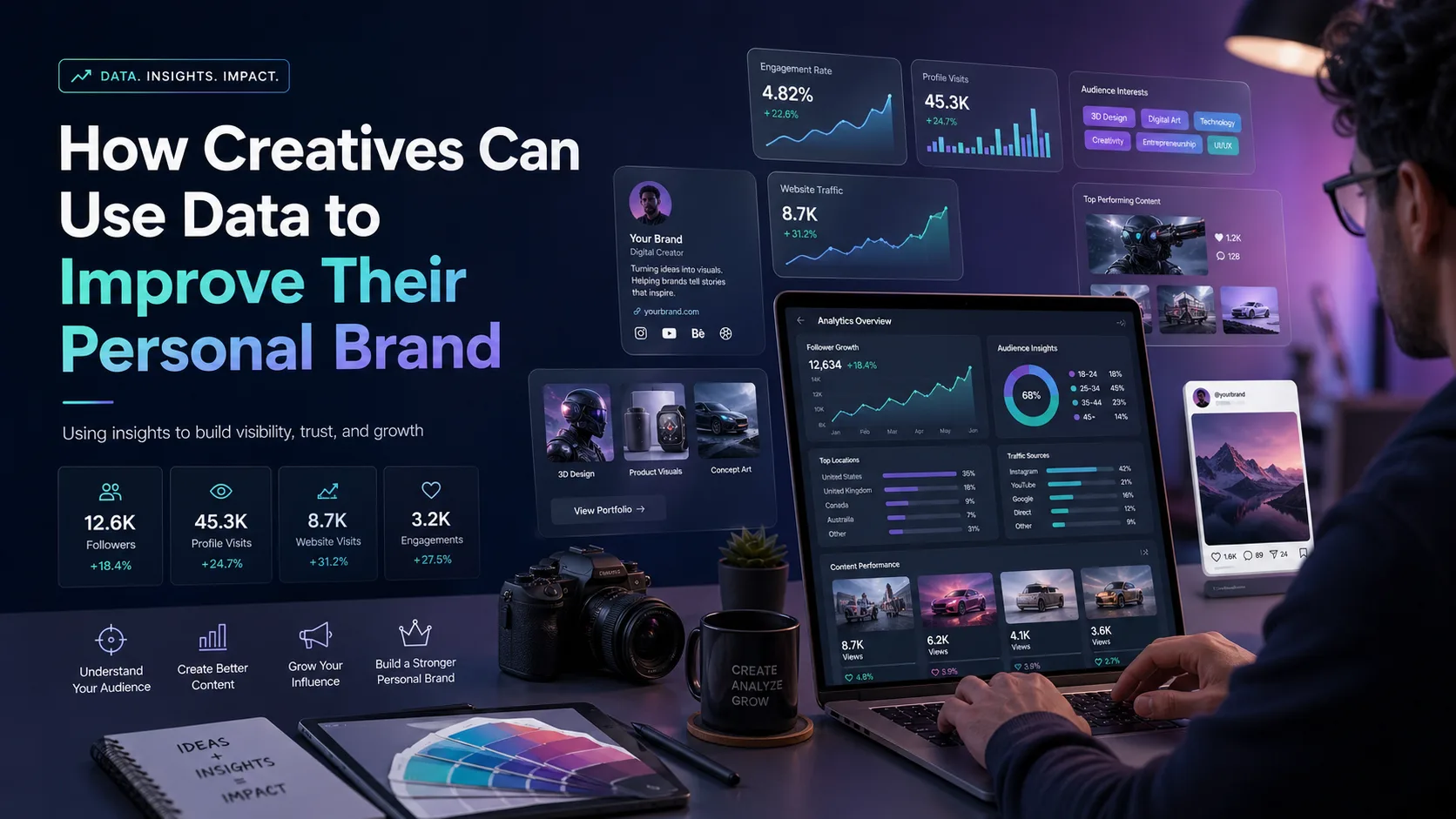
However, building a personal brand should not be based only on guesswork. Creatives can use data to understand what their audience likes, what content performs well, and how to improve their online presence. Data does not remove creativity; instead, it supports creativity. It helps creatives make smarter decisions, create better content, and build a brand that connects with the right audience.
What Is a Personal Brand?
A personal brand is the image people have of you based on what you share, how you communicate, and the value you provide. It is not just about having a logo, beautiful profile picture, or stylish design. It is about the message people receive when they interact with your work.
For example, if you are a graphic designer who regularly shares clean designs, branding tips, and helpful design advice, people may begin to see you as a professional designer who understands branding. If you are a content creator who teaches people how to use data, your audience may begin to trust you as someone knowledgeable in data analysis.
Your personal brand answers important questions such as: What do you do? Who do you help? What value do you provide? Why should people trust you? When creatives understand these questions, they can build a clearer and more professional online identity.
Why Data Matters in Personal Branding
Data helps creatives understand how people respond to their content and online presence. Instead of posting content and hoping it works, data allows you to measure performance and make improvements.
For example, if you post design tips on LinkedIn and notice that tutorial posts receive more engagement than general motivational posts, that is useful information. It tells you that your audience may prefer educational content. If your Instagram reels get more views when you show your design process, that is also data. It shows that people are interested in how you create your work.
Data helps you answer questions like:
- What type of content attracts more people?
- Which platform gives me the best results?
- What topics does my audience care about?
- When is the best time to post?
- Which posts bring followers, comments, shares, or client messages?
When you use data to answer these questions, your personal brand becomes more strategic. You stop creating blindly and start creating with purpose.
Understanding Your Audience Through Data
One of the most important parts of personal branding is knowing your audience. Your audience includes the people who follow you, engage with your content, read your blog, watch your videos, or may become future clients.
Data can help you understand your audience better. Most social media platforms provide analytics that show information such as age range, location, gender, active times, and content interests. For example, Instagram Insights, LinkedIn analytics, TikTok analytics, YouTube Studio, and Google Analytics can help you understand who is interacting with your content.
As a creative, you can use this information to adjust your message. If your audience is mostly made up of beginner designers, you may create more beginner-friendly tutorials. If your audience includes business owners, you may create content that explains how good design can help their businesses grow.
Tracking Content Performance
To improve your personal brand, you need to know which content performs well. Content performance simply means how well your posts, videos, articles, or designs are doing based on measurable results.
Some important metrics creatives can track include:
- Views
- Likes
- Comments
- Shares
- Saves
- Clicks
- Profile visits
- Followers gained
- Messages received
These numbers help you understand the impact of your content. For example, a post may get many likes but no comments. Another post may get fewer likes but more people asking questions or sending messages. The second post may actually be more valuable because it creates stronger engagement.
Choosing the Right Platforms
Not every platform will work the same way for every creative. Some creatives grow faster on Instagram because their work is visual. Others perform better on LinkedIn because they share professional insights. Some may grow through YouTube, TikTok, X, Pinterest, or blogging.
Data helps you know where to focus your energy. If you are posting on five platforms but only two are bringing strong engagement, you may need to focus more on those two. This does not mean you should abandon other platforms completely, but it helps you prioritize your time.
Improving Your Content Strategy
A content strategy is a plan for what you create, why you create it, and how it supports your personal brand. Many creatives struggle because they post without a clear direction. Data can help you create a better strategy.
Start by reviewing your best-performing content. Look at your top posts, videos, or articles. Ask yourself: What topic did I discuss? What format did I use? What problem did I solve? Why did people respond well to it?
For example, if your best-performing posts are tutorials, your audience may want educational content. If your best-performing content is behind-the-scenes work, your audience may enjoy seeing your creative process. If your case studies get more attention, people may want proof of your skills.
Building Trust With Evidence
One powerful way data improves personal branding is by helping creatives show evidence of their growth and results. People trust proof. If you can show what you have achieved, your brand becomes stronger.
For example, instead of saying, “I create good designs,” a designer can say, “I helped improve a brand’s social media engagement by redesigning their visual content.” A content creator can say, “My content strategy increased page views by 40% in one month.” A data analyst can say, “I created a dashboard that helped a business track sales performance more clearly.”
This type of evidence makes your personal brand more credible. It shows that you are not only creative but also results-driven.
Measuring Personal Brand Growth
To build a strong personal brand, you need to measure your growth over time. Growth does not only mean gaining followers. It can also mean better engagement, more profile visits, more website traffic, more client inquiries, or more opportunities.
Some useful personal brand metrics include:
- Follower growth
- Engagement rate
- Website visits
- Blog views
- Email subscribers
- Portfolio views
- Profile visits
- Direct messages
- Client inquiries
- Collaboration requests
Tracking these numbers monthly can help you see whether your brand is improving. You can use Excel or Google Sheets to create a simple personal brand tracker.
Using Data to Find Your Best Content Style
Every creative has a unique style, but data can help you understand which part of your style connects most with your audience. This does not mean you should copy trends blindly. It means you should observe how people respond to your work.
For example, a designer may notice that simple, clean designs get more engagement than complex ones. A writer may notice that practical guides perform better than opinion posts. A video creator may notice that short educational videos perform better than long casual videos.
This information helps you refine your content style. You can still be creative, but you will be more aware of what your audience finds valuable.
Avoiding Common Mistakes
While data is useful, creatives should avoid using it the wrong way. One common mistake is focusing only on vanity metrics. Vanity metrics are numbers that look impressive but may not show real impact. For example, likes are nice, but they do not always mean people trust your brand or want to work with you.
Another mistake is changing your brand too often based on one poor-performing post. One post is not enough to judge your entire strategy. Look for patterns over time before making major decisions.
Creatives should also avoid losing their originality. Data should guide your creativity, not control it completely. Your personal brand should still reflect your values, voice, and unique creative identity.
Simple Tools Creatives Can Use
You do not need complicated tools to start using data for your personal brand. Many beginner-friendly tools can help.
- Excel or Google Sheets: For tracking followers, engagement, content ideas, and monthly growth.
- Social media analytics: For checking how your posts are performing.
- Google Analytics: For understanding blog or website traffic.
- Canva: For designing simple reports and visual content.
- Notion: For organizing your content calendar and performance notes.
The most important thing is to start simple. You can begin by tracking your top five posts each month and writing down what made them successful.
Practical Steps to Start Today
- Define your brand goal: Decide whether you want more clients, more followers, more blog traffic, or more opportunities.
- Choose your key metrics: Track the numbers that connect directly to your goal.
- Review your content regularly: Study your best-performing posts weekly or monthly.
- Improve your strategy: Create more of what works and adjust what is not working.
- Stay consistent: Data becomes more useful when you collect it over time.
Conclusion
Data is a powerful tool for creatives who want to improve their personal brand. It helps you understand your audience, track your content performance, choose the right platforms, and make smarter branding decisions. Instead of relying only on guesswork, creatives can use data to build a brand that is clear, professional, and valuable.
Improving your personal brand does not mean losing your creativity. It means using information to make your creativity more effective. When you combine creativity with data, you can create better content, attract the right audience, and open more opportunities for growth.
For modern creatives, data is not just for analysts. It is a tool for visibility, trust, and long-term success.