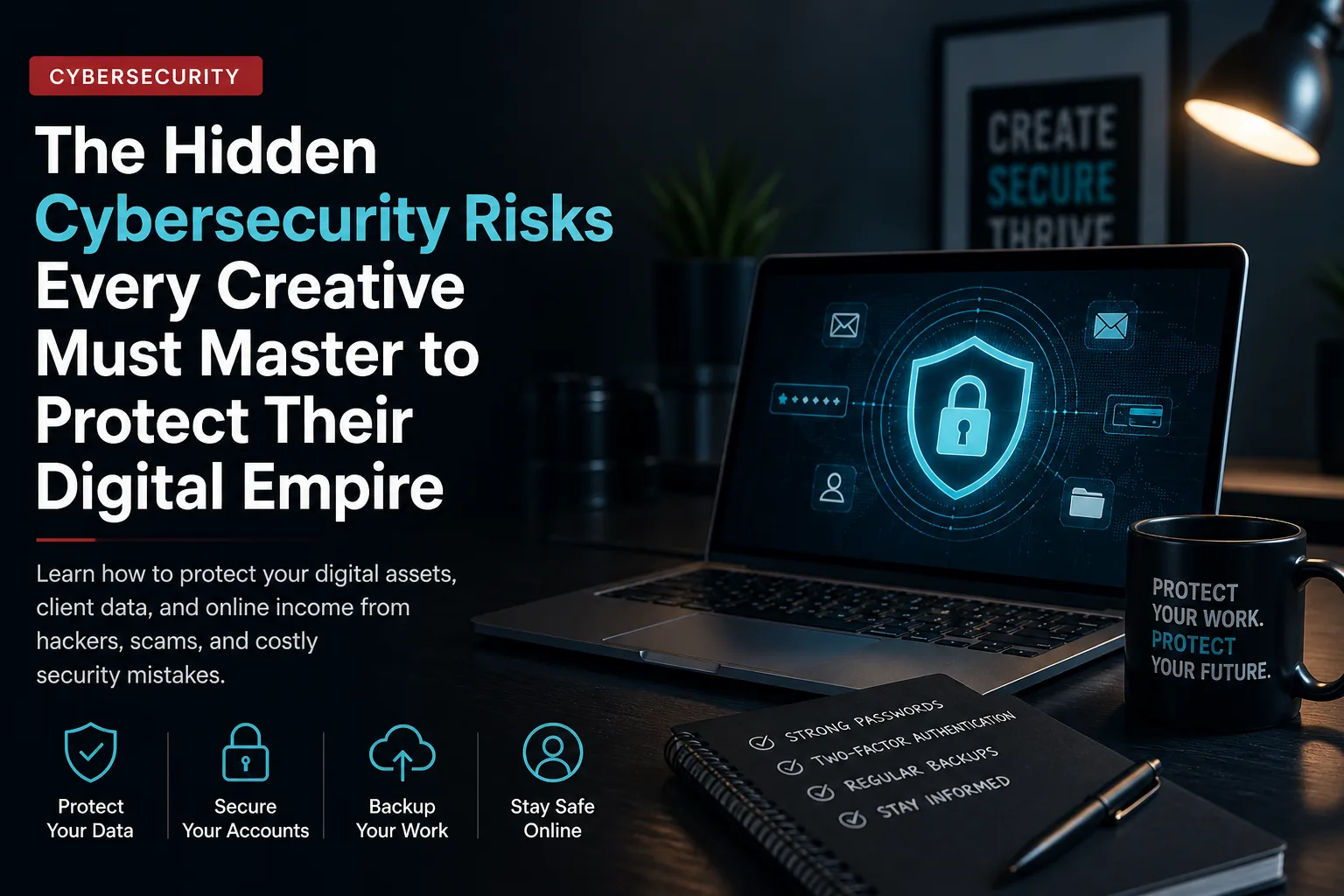
The Hidden Cybersecurity Risks Every Creative Must Master to Protect Their Digital Empire
In today’s hyper-connected world, creativity no longer exists in isolation—it thrives online. Whether you’re a designer, content creator, video editor, copywriter, or digital marketer, your work lives, breathes, and earns on the internet. But here’s the uncomfortable truth: while you’re focused on creating, someone else might be focused on exploiting.
Cybersecurity is no longer optional. It’s no longer a “tech person’s job.” It’s a survival skill—especially for creatives building a personal brand, freelance business, or digital asset portfolio.
This post will walk you through the real cybersecurity risks creatives face, the costly mistakes many are making, and how you can transition from being vulnerable to becoming a secure, resilient digital creator.
Why Cybersecurity Matters More Than Ever for Creatives
Creatives are prime targets for cyber threats—and not because they’re careless, but because they’re valuable.
Think about what you own digitally:
- Client projects and confidential files
- Login credentials to platforms and tools
- Payment systems and financial data
- Intellectual property (designs, content, ideas)
- Personal brand assets (social media accounts, websites)
A single breach can:
- Destroy your reputation
- Cost you clients and income
- Lead to identity theft
- Permanently erase your work
Unlike traditional businesses, many creatives don’t have IT teams. You are the creator, the marketer, the strategist—and the security team. That means you must be intentional about protection.
The Most Common Cybersecurity Threats Creatives Face
Let’s break down the real threats that are actively targeting creatives today.
1. Phishing Attacks
This is one of the most common—and effective—attacks.
You receive an email or message that looks legitimate. It might say:
- “Your account will be suspended”
- “You’ve received a payment”
- “Client shared a file with you”
Once you click the link and enter your login details, your account is compromised.
Why creatives fall for it: You’re constantly communicating with clients and platforms, so fake messages blend in easily.
2. Weak Password Practices
Using the same password across multiple platforms is a disaster waiting to happen.
Example: If your email password is the same as your design tool or payment platform, hackers can access everything in minutes.
3. Public Wi-Fi Exploitation
Working from cafes, co-working spaces, or public hotspots?
That convenience comes with a cost.
Hackers can intercept your data on unsecured networks, including:
- Login credentials
- Emails
- File transfers
4. Malware and Fake Software
Downloading cracked tools, plugins, or templates can inject malware into your system.
Once installed, malware can:
- Steal sensitive data
- Track your keystrokes
- Give hackers remote access
5. Social Media Account Hijacking
Your social media accounts are part of your brand—and hackers know that.
Once they gain access, they can:
- Scam your followers
- Damage your reputation
- Lock you out permanently
6. Data Loss and Ransomware
Imagine waking up and all your files are gone—or locked behind a ransom.
Without proper backups, your entire creative portfolio could disappear instantly.
The Cost of Ignoring Cybersecurity
Let’s be real—most creatives only take security seriously after something goes wrong.
Here’s what’s at stake:
- Lost income: Clients won’t trust a compromised creator
- Reputation damage: Trust takes years to build, seconds to destroy
- Emotional stress: Recovery from attacks can be overwhelming
- Legal consequences: Mishandling client data can lead to legal issues
Cybersecurity isn’t just about protection—it’s about sustainability.
The Shift: From Vulnerable Creative to Secure Creative
To thrive online, you need to shift your mindset.
You’re not just a creative—you’re a digital asset owner.
That means:
- Protecting your work
- Securing your access points
- Managing your digital risks
Let’s walk through how to make that shift.
1. Strengthen Your Password Game
Stop using simple or repeated passwords.
What to do instead:
- Use long, complex passwords (at least 12–16 characters)
- Avoid personal information (names, birthdays)
- Use a password manager to store and generate passwords
This single step can eliminate a huge percentage of attacks.
2. Enable Two-Factor Authentication (2FA)
This adds an extra layer of security.
Even if someone gets your password, they can’t access your account without a second verification step.
Enable 2FA on:
- Email accounts
- Social media platforms
- Payment systems
- Cloud storage
3. Secure Your Email First
Your email is the gateway to all your accounts.
If it’s compromised, everything else is at risk.
Best practices:
- Use a strong, unique password
- Enable 2FA
- Avoid clicking suspicious links
- Regularly review account activity
4. Avoid Public Wi-Fi Risks
If you must work on public Wi-Fi:
- Avoid logging into sensitive accounts
- Use a VPN to encrypt your connection
- Turn off file sharing
Better yet—use your mobile hotspot when possible.
5. Backup Your Work Religiously
Never rely on a single storage system.
Follow the 3-2-1 rule:
- 3 copies of your data
- 2 different storage types
- 1 offsite backup
Use a combination of:
- Cloud storage
- External hard drives
Your future self will thank you.
6. Be Careful What You Download
Free tools can be expensive in disguise.
Only download software from:
- Official websites
- Trusted platforms
Avoid:
- Cracked software
- Unknown plugins
- Suspicious file links
7. Protect Your Social Media Accounts
Your online presence is part of your business.
Secure it by:
- Enabling 2FA
- Using unique passwords
- Monitoring login activity
- Avoiding suspicious DMs and links
8. Educate Yourself Continuously
Cyber threats evolve—and so should you.
Stay updated on:
- New attack methods
- Security best practices
- Platform vulnerabilities
The more you know, the harder it is to exploit you.
Building a Cybersecurity Routine as a Creative
Security isn’t a one-time setup—it’s a habit.
Here’s a simple routine you can follow:
Weekly:
- Review account activity
- Update important passwords if needed
Monthly:
- Backup all files
- Check security settings on major platforms
Quarterly:
- Audit tools and access permissions
- Remove unused apps and integrations
The Competitive Advantage of Being a Secure Creative
Most creatives ignore cybersecurity.
That’s your opportunity.
When you prioritize security:
- Clients trust you more
- You stand out professionally
- You protect your income streams
- You build a sustainable digital brand
Security becomes part of your value—not just a background task.
Final Thoughts: Your Creativity Deserves Protection
You’ve spent time building your skills, your brand, and your digital presence.
Don’t let negligence destroy what you’ve created.
Cybersecurity isn’t about fear—it’s about control.
It’s about owning your digital space, protecting your work, and ensuring that your growth isn’t interrupted by avoidable threats.
Start small. Stay consistent. Build awareness.
Because in the digital world, the most successful creatives aren’t just talented—they’re protected.