
Introduction
One of the most important parts of creative success is understanding the people you are creating for. Whether you are a designer, content creator, writer, photographer, video editor, digital marketer, or freelancer, your work becomes more valuable when it connects with the right audience. Creativity gives your work originality, but data helps you understand how people respond to that creativity.
Many creatives create based on personal taste, assumptions, or trends. While these can be useful, they are not always reliable. What you like may not always be what your audience needs. What looks attractive to you may not be what encourages people to engage, follow, buy, or take action. This is why data is important.
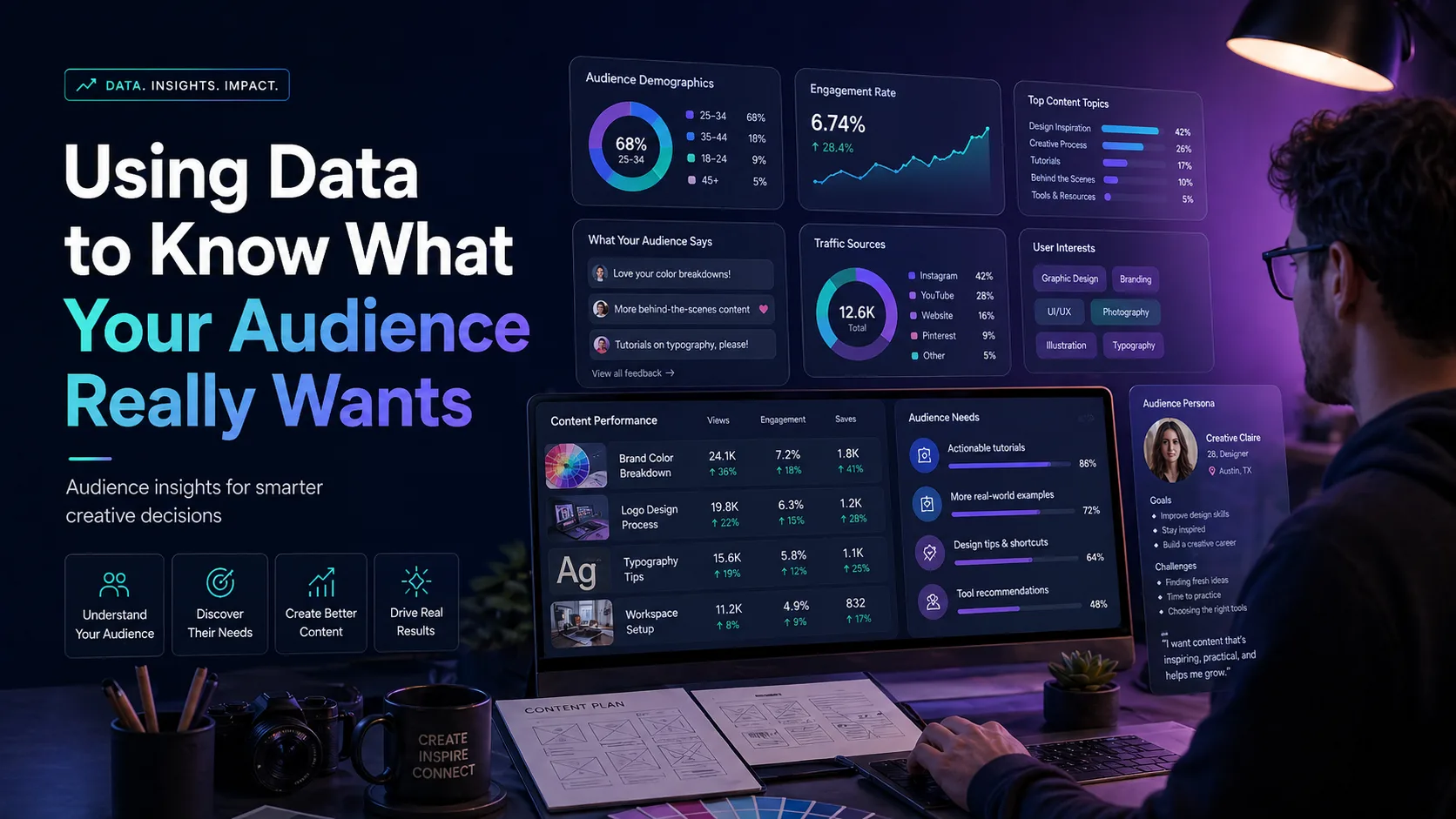
Data helps creatives move from guessing to understanding. It shows what your audience pays attention to, what they ignore, what they enjoy, and what motivates them to respond. When used properly, data becomes a guide that helps you create content, designs, and services that are more relevant, strategic, and effective.
What Audience Data Means
Audience data refers to the information you collect about the people who interact with your work. This information can come from social media platforms, websites, blogs, email newsletters, surveys, comments, client feedback, and online communities.
For example, if you post content on Instagram, your audience data may include views, likes, comments, shares, saves, reach, profile visits, and follower growth. If you run a blog, your data may include page views, reading time, traffic sources, clicks, and most-read articles.
Audience data helps answer important questions such as:
- What type of content does my audience engage with most?
- Which topics attract the most attention?
- What problems does my audience want solved?
- Which platform gives me the best results?
- What kind of content leads people to follow, comment, share, or contact me?
These answers help you understand your audience beyond surface-level assumptions. Instead of creating randomly, you begin to create with a clear purpose.
Why Knowing Your Audience Matters
Every creative work has a purpose. A designer wants to communicate a message visually. A content creator wants to inform, entertain, educate, or inspire. A freelancer wants to attract clients and deliver value. A blogger wants to reach readers and keep them engaged.
Knowing your audience helps you create work that is relevant. It allows you to speak directly to their needs, interests, struggles, and expectations. When your audience feels understood, they are more likely to trust your work, engage with your content, and return for more.
For example, a creative who writes about design may discover that their audience prefers beginner-friendly tutorials rather than advanced design theory. This information helps them create content that is more useful to their readers.
Without data, you may continue creating content that looks good but does not produce results. With data, you can understand what truly matters to your audience and improve your creative direction.
Types of Audience Data Creatives Should Track
1. Engagement Data
Engagement data shows how people interact with your content. This includes likes, comments, shares, saves, clicks, replies, and reactions.
For creatives, engagement data is very useful because it shows whether your content is connecting with people. A post with many likes may show that people enjoyed it. A post with many comments may show that it started a conversation. A post with many shares may show that people found it valuable enough to recommend. A post with many saves may show that people want to return to it later.
Engagement data helps you identify the kind of content your audience finds useful, relatable, or interesting.
2. Demographic Data
Demographic data gives basic information about your audience. This may include age, location, gender, language, profession, or interests.
This type of data helps you understand who you are speaking to. If your audience is mostly made up of students or beginners, your content should be simple, clear, and educational. If your audience includes business owners, your content should focus more on value, results, and problem-solving.
Demographic data helps you adjust your tone, examples, and message so your content feels relevant to the people consuming it.
3. Behavioural Data
Behavioural data shows what your audience does when they interact with your content or website. This includes what they click, how long they stay, which pages they visit, what they watch, what they skip, and what action they take afterward.
Behavioural data is important because it reveals interest through action. For example, if people spend more time reading your blog posts about Excel for creatives, it may mean they are interested in practical tools.
4. Feedback Data
Feedback data comes directly from your audience. This includes comments, reviews, direct messages, email replies, survey responses, testimonials, and client feedback.
Feedback data is powerful because it tells you what people are thinking in their own words. Numbers can show what is happening, but feedback can explain why it is happening.
Pay attention to repeated questions, complaints, and compliments. They often reveal what your audience truly needs.
How to Use Data to Discover What Your Audience Wants
1. Study Your Best-Performing Content
Begin by reviewing the content that has performed best in the past. Look at your most-viewed blog posts, most-liked social media posts, most-shared designs, or most-commented videos.
Ask yourself:
- What topic did I cover?
- What problem did the content solve?
- What format did I use?
- Was the content educational, inspirational, personal, or entertaining?
- Why might the audience have responded to it?
Your best-performing content provides clues about what your audience wants more of.
2. Look for Repeated Patterns
One successful post is useful, but repeated patterns are more reliable. You should not change your entire strategy because one post performs well. Instead, look for content themes that consistently perform better over time.
For example, if posts about audience insights, Excel tracking, personal branding, and content strategy repeatedly perform well, this may show that your audience wants practical data education for creative growth.
3. Pay Attention to Comments and Questions
Your audience often reveals what they want through the questions they ask. Comments and direct messages can become a strong source of content ideas.
For example, if people ask:
- How do I know what content my audience likes?
- What metrics should I track?
- How can I use Excel as a creative?
- How do I grow my personal brand with data?
- How can I improve my content strategy?
These questions are not just replies. They are signals. They show what your audience is struggling with and what they want to learn.
4. Track Website and Blog Performance
If you own a blog or website, your website data can help you understand what attracts your audience. You can track which articles get the most views, which pages people spend the most time on, which links they click, and where your visitors come from.
Website data also helps you understand how people find you. If most of your visitors come from LinkedIn, you may need to share more content there. If they come from search engines, you may focus more on SEO-friendly blog posts.
5. Use Surveys and Polls
Sometimes, the best way to understand your audience is to ask them directly. Surveys and polls are simple but powerful tools for collecting audience opinions.
You can ask questions like:
- What topic would you like me to write about next?
- What is your biggest challenge as a creative?
- Do you struggle with understanding data?
- Which tool do you want to learn: Excel, Google Analytics, or Canva analytics?
- What kind of content helps you most?
Surveys help you confirm what your audience wants instead of relying only on assumptions.
Tools Creatives Can Use to Understand Audience Data
1. Excel or Google Sheets
Excel and Google Sheets are excellent tools for tracking content performance. You can create a simple table with columns such as date, platform, content title, views, likes, comments, shares, saves, clicks, and notes.
2. Social Media Analytics
Most social media platforms have built-in analytics. Instagram, LinkedIn, TikTok, YouTube, and Facebook provide insights into reach, engagement, audience demographics, and content performance.
3. Google Analytics
Google Analytics is useful for bloggers and website owners. It helps you understand website traffic, popular pages, user behaviour, traffic sources, and visitor engagement.
4. Google Forms
Google Forms can help you collect direct feedback from your audience. You can create short surveys and share them with your readers, followers, or clients.
Turning Audience Data Into Better Creative Decisions
The purpose of data is not just to collect numbers. The goal is to use the information to improve your creative work.
If your audience enjoys practical guides, create more step-by-step posts. If they engage more with short videos, include more video content. If they respond to personal stories, share more of your creative journey. If they ask questions about tools, create tutorials. If they visit your blog through LinkedIn, promote more content there.
Data helps you decide what to create, where to share it, and how to improve it. When you act on audience data, your creative work becomes more intentional and effective.
Common Mistakes to Avoid
One common mistake is focusing only on likes. Likes are easy to notice, but they do not always show real value. A post with fewer likes but more saves, shares, comments, or messages may be more meaningful.
Another mistake is ignoring negative or low performance. Poor-performing content can also teach you something. It may show that the topic was not relevant, the title was not attractive, or the format was not clear.
You should also avoid changing your strategy too quickly. Data becomes more useful when you observe it over time. Look for patterns before making major changes.
Finally, do not allow data to remove your originality. Data should guide your creativity, not replace it. Your voice, ideas, and creative identity still matter.
Conclusion
Using data to know what your audience really wants is one of the smartest ways to grow as a creative. Data helps you understand what people enjoy, what they need, and how they respond to your work. It gives you the confidence to create content, designs, and services that are more useful and relevant.
For creatives, audience data is not just about numbers. It is about listening carefully to your audience through their actions, feedback, and behaviour. When you understand your audience, you can create with more purpose, improve your strategy, and build stronger connections.
Creativity becomes more powerful when it is supported by insight. By combining creative thinking with audience data, you can produce work that not only looks good but also delivers real value.