
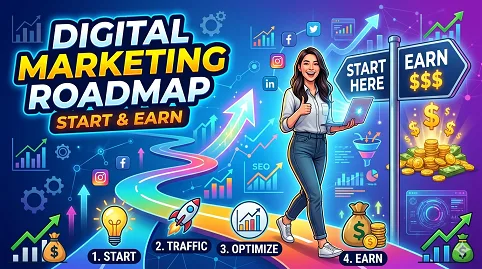


Digital Marketing Blogging Roadmap: From Zero to Monetized Authority
A phased, search-intent driven plan for digital marketers to learn the field, rank tutorials, build authority, and earn — starting with beginner-friendly content, not random SEO or social media tips.
Google’s guidance: Helpful, reliable, people-first content wins. Google’s AI features & Bing Webmaster Guidelines reward content that answers real questions, surfaces in Copilot & AI search. This roadmap aligns with E-E-A-T and answer-engine optimization. If you're new to the platform, start by reading the Welcome to Craftdas guide to understand the connected ecosystem you'll be building within.
Why most new digital marketing bloggers fail: They start by posting scattered "SEO tips" or "social media hacks" without a strategic foundation. Instead, a winning digital marketing blogger learns the field in phases, understands search intent, publishes beginner-friendly articles, builds internal links, optimizes for both search engines and AI answers, then monetizes through Craftdas blogging, affiliate offers, templates, freelance services, and future courses. This guide gives you the exact playbook. The overall philosophy aligns with the reality that blog posts take time to rank — you're building long-term assets, not chasing quick wins.
For similar structured roadmaps in adjacent niches, explore the Content Writing Blogger Roadmap, the 3D Artist Blogging Roadmap, and the Data Analyst Blogging Roadmap — the same phased principles apply across disciplines.
Phase 1 — Beginner Digital Marketing Foundation
Goal: Understand what digital marketing is, how the industry works, and what beginners actually search for. First posts must answer real beginner questions, not showcase advanced funnel strategies or multimillion-dollar case studies that intimidate readers.
Why this matters for digital marketers: Digital marketing spans SEO, content marketing, social media marketing, email marketing, PPC (pay-per-click advertising), affiliate marketing, influencer marketing, marketing analytics, conversion rate optimization (CRO), and marketing automation. A beginner blogger does not need to master everything. The smart path is to learn one area (e.g., SEO for bloggers, social media for small businesses, or email marketing for ecommerce) and teach as you learn. This "learn in public" approach builds trust and attracts readers who are at the same stage as you were weeks ago. The good news is that you can write posts that Google and AI understand even without SEO tools — clarity and structure matter more than expensive software.
What to post first: Beginner guides, channel explainers (SEO, social media, email, PPC), digital marketing glossary, simple tutorials (how to do keyword research, how to create a social media calendar), common mistakes, free tools, and channel comparisons (SEO vs PPC, organic vs paid social). Each piece of content should answer one clear question that a complete novice types into Google or Bing. For example, "what is digital marketing for beginners" has significant search volume — you can rank by writing a truly helpful, detailed guide of 2,500+ words with examples, a glossary, and a FAQ section. Including a definition box within the first 150 words also increases your chances of appearing in Google's AI Overviews and Bing's Copilot responses. Do not write thin, 500-word articles. Write definitive resources that become the go-to reference for beginners in your sub-niche.
Research queries to target (each becomes its own article): what is digital marketing for beginners, how does digital marketing work, SEO vs content marketing vs social media marketing, digital marketing terms every beginner should know, types of digital marketing (SEO, PPC, social media, email, content, affiliate, influencer), common digital marketing mistakes beginners make, how to learn digital marketing from scratch, best free digital marketing tools for beginners, best paid digital marketing tools for professionals, how to create your first digital marketing strategy, how to build a digital marketing portfolio, how to get a digital marketing job with no experience, digital marketing certifications for beginners (Google, HubSpot, Meta).
Insight specific to digital marketers: New digital marketing bloggers often skip "why digital marketing matters for different business types." Create a post: "Why ecommerce stores, local businesses, SaaS companies, and creators need digital marketing — 4 business types explained" — that attracts both aspiring marketers AND potential clients. This dual-audience approach is powerful. To optimize this post for Google, include subheadings like "Business Type 1: Ecommerce (product SEO, abandoned cart emails, social commerce)" and "Business Type 2: Local Businesses (Google Business Profile, local SEO, review management)." Add a real-world case study or hypothetical example.
Phase 2 — Pick A Clear Digital Marketing Sub-Niche
Instead of being a generic "digital marketing blog" covering everything from SEO to TikTok ads to email automation, specialize. Readers trust specialists, and search engines reward niche authority. A blog that covers "SEO for small business owners" will outrank a general marketing blog for keywords like "how to do local SEO for a plumber."
Best sub-niches with high search demand and reasonable competition for beginners:
- SEO for small businesses — Focus on local SEO, keyword research, on-page optimization, technical SEO basics, and link building for beginners. Target small business owners who do their own marketing.
- Content marketing for bloggers and creators — Teach content strategy, editorial calendars, blog post promotion, repurposing content, and measuring performance. This sub-niche overlaps with the Content Writing Blogger Roadmap.
- Social media marketing for small businesses — Focus on organic Instagram, Facebook, LinkedIn, Pinterest, or TikTok. Teach content creation, posting schedules, engagement, and analytics.
- Email marketing for ecommerce — Teach welcome sequences, abandoned cart flows, post-purchase follow-ups, segmentation, and newsletter content. Target online store owners.
- PPC and paid advertising for beginners — Focus on Google Ads and Meta Ads. Teach campaign structure, keyword match types, ad copy, bidding strategies, and basic optimization.
- Marketing analytics and reporting — Teach Google Analytics 4 (GA4), conversion tracking, goal setting, dashboard creation, and data-driven decision making. This connects to the Data Analyst Blogging Roadmap.
- Affiliate marketing for bloggers — Teach how to choose affiliate programs, write product reviews, disclose affiliate links, and promote offers. Target beginner bloggers.
- Local SEO for brick-and-mortar businesses — Focus on Google Business Profile optimization, local citations, review generation, and "near me" search optimization.
- B2B digital marketing — Teach LinkedIn marketing, account-based marketing (ABM), B2B content syndication, and lead generation funnels.
- Marketing automation and CRM — Teach tools like HubSpot, Mailchimp, ActiveCampaign, or ConvertKit. Teach automation workflows and lead scoring.
Research queries to find your profitable angle: profitable digital marketing blog niches, best digital marketing niches for beginners, digital marketing topics people search for, SEO blog niche ideas, social media marketing blog topics, email marketing blog niche, most requested digital marketing services online, how to position a digital marketing blog for affiliate marketing.
Once you pick your sub-niche, write a "manifesto post" explaining exactly who you serve. For example: "Why I Help Local Bakeries Rank #1 on Google Maps." For additional structure on niche authority, review the 3D Artist Blogging Roadmap.
Phase 3 — Keyword Research For Digital Marketing Blog
Goal: Find what people already search for before writing. For a digital marketing blog, focus on keywords with "how to," "what is," "best," "vs," "for beginners," "guide," "tips," "free," "tools," "checklist," "template," "mistakes," and "certification" modifiers. Avoid head terms like "digital marketing" (too competitive) and target long-tail phrases like "how to do keyword research for a new blog" or "best free SEO tools for small business owners."
What to post after keyword research: Strategy guides, tool comparison posts, tool roundups, mistake posts, checklist posts, and beginner roadmaps.
Research queries to use in your keyword tool: keyword research for digital marketing blog, low competition SEO keywords for beginners, long tail keywords for social media marketing, digital marketing keyword ideas for beginners, email marketing keywords with low competition, PPC keywords for blog posts, content marketing keywords for SEO, local SEO keywords, digital marketing questions people ask on Google, People Also Ask digital marketing topics, how to find buyer intent keywords for marketing services.
Example keyword table:
- "how to do keyword research for SEO" — Volume: 5,000-15,000 — Intent: Informational — Article: Step-by-step tutorial
- "Ahrefs vs Semrush for beginners" — Volume: 1,000-5,000 — Intent: Commercial — Article: Comparison with affiliate links
- "best free social media scheduling tools" — Volume: 1,000-5,000 — Intent: Commercial — Article: Roundup post
- "how much to charge for social media management" — Volume: 500-2,000 — Intent: Commercial — Article: Pricing guide + service CTA
- "common Google Ads mistakes" — Volume: 500-1,500 — Intent: Informational — Article: Mistake post with fixes
Create a spreadsheet with columns for keyword, search volume, keyword difficulty, intent, and suggested article title. Target 2-3 keywords per article.
Phase 4 — Content Pillars For The Digital Marketing Blog
Pillar 1: Digital Marketing Basics For Absolute Beginners — This pillar targets people who have never marketed a business online. Target keywords: digital marketing beginner guide, how to start digital marketing, digital marketing channels explained, what should a beginner learn first, digital marketing learning roadmap, essential digital marketing skills for beginners, how to build a digital marketing portfolio, digital marketing certifications roundup. For portfolio strategies, the Data Analyst Blogging Roadmap offers excellent examples of project-based portfolio building.
Pillar 2: SEO (Search Engine Optimization) — This pillar attracts readers who want organic traffic. Target keywords: SEO for absolute beginners, how search engines work, keyword research for beginners, on-page SEO explained, technical SEO basics, off-page SEO and link building, local SEO for small businesses, SEO content writing (link to the Content Writing Blogger Roadmap for deeper writing guidance), SEO tools for beginners, common SEO mistakes, SEO checklist, how to measure SEO success.
Pillar 3: Social Media Marketing — This pillar teaches readers how to build an audience on social platforms. Target keywords: social media marketing for beginners, how to choose the right social media platform, how to create a social media content strategy, social media content calendar template, how to create engaging social media posts, organic reach vs paid social, Instagram marketing for small businesses, Facebook marketing, LinkedIn marketing for B2B, TikTok for business basics, Pinterest SEO, social media analytics for beginners, best free social media management tools, common social media marketing mistakes.
Pillar 4: Email Marketing And Marketing Automation — This pillar teaches readers how to build and nurture an email list. Target keywords: email marketing for beginners, why email marketing is important, how to build an email list from scratch, email marketing platforms compared, how to write welcome emails, email sequence types, how to segment your email list, email personalization basics, email deliverability, A/B testing email subject lines, email marketing KPIs, email marketing automation workflows, best practices for newsletters, common email marketing mistakes, email marketing legal requirements (GDPR, CAN-SPAM, CCPA).
Pillar 5: Monetization — Services, Affiliates, Templates, And Consulting — This pillar is critical for income. Target keywords: how to make money with digital marketing, best freelance platforms for digital marketers, how to find digital marketing freelance clients, how to price digital marketing services, digital marketing service packages (SEO audit, social media management, email marketing setup, PPC management, content strategy, analytics reporting), how to sell digital marketing templates (SEO content briefs, social media calendars, email sequences, marketing plans, client dashboards) on Craftdas Market, best affiliate programs for digital marketers (Craftdas, Semrush, Ahrefs, Moz, HubSpot, ConvertKit, ActiveCampaign, Canva, Google Workspace, Bluehost, Elementor, OptinMonster, ThriveCart, Teachable, Kajabi, DataCamp, Coursera, Udemy), how to create a paid digital marketing course, how to build an email list as a digital marketing blogger. The monetization strategies here complement those detailed in the 3D Artist Blogging Roadmap and the Content Writing Blogger Roadmap.
Each pillar should have a dedicated category page. Interlink pillar pages to each other where relevant — for example, the SEO pillar links to the content basics pillar for keyword research, and the email pillar links to the analytics pillar for measuring campaign performance.
Phase 5 — How To Write Posts That Can Rank (Search + AI Answers)
Goal: Every post should answer one clear search intent. Matching intent is the single most important ranking factor after relevance. Always check the top 3 Google results for your target keyword before writing.
Recommended post structure:
- Clear title with the main keyword near the beginning. Example: "SEO For Beginners: 7 Steps To Rank Your First Blog Post" — not "SEO Tips."
- Short direct answer within the first 150 words. For "what is SEO," write: "SEO (Search Engine Optimization) is the practice of optimizing websites to rank higher in search engine results pages (SERPs) for relevant keywords, thereby increasing organic (non-paid) traffic."
- Beginner-friendly explanation using simple language. Define every term. Break complex ideas into analogies.
- Step-by-step guide with numbered steps and examples. For process-oriented content, each step should be actionable and specific.
- Examples of good and bad practices. Show a weak meta description and rewrite it stronger.
- Common mistakes section with at least 5 specific errors. Use a table format: Mistake | Why It Hurts | How To Fix It.
- Checklist or downloadable resource. Increases email signups and dwell time.
- Internal links to 3-5 related posts. Use descriptive anchor text.
- Craftdas CTA that matches the post's intent. For tutorials: "download my free SEO checklist from Craftdas Market." For service-related content: "hire me for a website SEO audit." If you plan to sell digital products, review how to sell digital products on Craftdas Market.
- FAQ section with 5-10 questions and concise answers. Use FAQ schema markup (JSON-LD).
Additional insight for AI answers: Answer engines prioritize structured, concise, authoritative content. Use definition lists, include a "key takeaways" box at the top of long guides, and cite sources for statistics.
Phase 6 — Internal Linking Strategy For Digital Marketing Topic Clusters
Goal: Build topic authority by connecting related posts together. Internal links pass "link equity" and help search engines understand your site's structure.
Main pillar article: Digital Marketing For Beginners: The Complete Roadmap To Learning SEO, Social Media, Email, And Making Money On Craftdas — This article cross-links to other roadmap content: the Content Writing Blogger Roadmap, 3D Artist Blogging Roadmap, and Data Analyst Blogging Roadmap.
Supporting posts:
- What Is Digital Marketing And How Does It Work?
- SEO For Absolute Beginners: First Keyword Research
- How To Create A Social Media Content Calendar
- How To Build An Email List From Scratch
- Google Analytics 4 For Beginners (First Setup)
- Common Digital Marketing Mistakes Beginners Make
- Best Free SEO Tools For Small Business Owners
- How To Make Money With Digital Marketing On Craftdas
Internal linking best practices: Use descriptive anchor text, aim for 5-10 internal links per 2000 words, link from high-traffic pages to newer posts, and avoid orphaned pages.
Phase 7 — Ranking In Search Engines And AI Answers
Goal: Make your content easy for Google, Bing, AI search, and answer engines to understand. Understand the reasons why blog posts take time to rank — this will keep you motivated during the early months.
Best content types for AI and search visibility:
- Definition posts ("what is SEO")
- Beginner roadmap posts ("how to learn digital marketing in 6 months")
- Checklist posts ("website SEO checklist")
- Comparison posts ("Ahrefs vs Semrush")
- Step-by-step tutorials with numbered steps
- FAQ posts ("50 SEO interview questions")
- Mistake-and-fix posts ("7 Google Ads mistakes that waste budget")
- Resource posts ("best free marketing tools 2025")
Research queries for AI optimization: how to optimize digital marketing tutorials for AI answers, how to appear in AI answers with SEO content, answer engine optimization for marketers, how to structure blog posts for AI search, how to write direct answers, how to optimize for Google AI Overviews, how to optimize for Bing Copilot search, how to write FAQ schema, how to make content easy for AI to summarize, how to write experience-based marketing content.
Phase 8 — Craftdas Blog + Affiliate Monetization For Digital Marketers
Goal: Turn traffic into income using multiple revenue streams: affiliate income, digital product sales, and services.
Money routes on Craftdas:
- Publish digital marketing tutorials — Monetize through display ads once you have 10,000+ monthly pageviews.
- Promote Craftdas affiliate offers — Refer new bloggers, buyers, or sellers to Craftdas.
- Recommend marketing tools as an affiliate — Join programs for Semrush, Ahrefs, Moz, HubSpot, ConvertKit, ActiveCampaign, Canva, Google Workspace, Bluehost, Elementor, OptinMonster, ThriveCart, Teachable, Kajabi, DataCamp, Coursera, and Udemy. Create "best tools" roundups and comparison posts. Disclose affiliate relationships clearly.
- Sell digital marketing templates on Craftdas Market — Create SEO content briefs, social media calendars, email sequences, marketing plans, client dashboards, audit checklists, and campaign trackers. Price templates $5-$50. Bundle 5-10 assets into a "starter pack" for $20-$50. Use the guide to selling digital products to optimize listings.
- Offer digital marketing services — Create a "Hire Me" page listing: SEO audit ($200-$1000), social media management ($500-$3000/month), email marketing setup ($300-$1500), PPC management ($500-$5000/month), content strategy ($500-$3000), analytics reporting ($200-$1000/month). Package into monthly retainers.
- Offer consulting and coaching — Strategy sessions, done-with-you implementation, or ongoing advisory roles. Price $100-$500/hour or $2000-$10,000/month retainer.
- Create paid digital marketing courses — Once you have 50+ blog posts and an email list of 1000+, create a course: "SEO Bootcamp for Small Business Owners" or "Social Media Marketing Masterclass" priced $197-$997.
- Sell done-for-you reports and audits — Website SEO audit reports, competitor analysis reports, backlink audit reports, technical SEO audits. Price $200-$2000 depending on depth.
Research queries for monetization: how digital marketers make money with blogs, affiliate marketing for marketing bloggers, best affiliate programs for digital marketers, how to write tool affiliate posts that convert, how to sell marketing templates online, how to price digital marketing services, how to offer SEO services on Craftdas, how to turn blog readers into clients, how to build income streams from a marketing blog.
Start monetization early: affiliate links in first 10 posts, one free template as email lead magnet by post #5, "Hire Me" page by post #10.
Phase 9 — Massive Growth Content Strategy For Digital Marketers
Goal: Create posts that attract beginners, small business owners, marketing managers, and affiliate clicks.
High-income post types:
- Best tools posts — "Best SEO tools for beginners" or "Best social media scheduling tools." Affiliate-rich.
- Tool comparison posts — "Ahrefs vs Semrush" or "HubSpot vs Mailchimp." High-intent commercial keywords.
- Best courses posts — "Best Google Ads courses for beginners" with affiliate links.
- Free resources roundups — "100+ free marketing templates" — collect emails for the full list.
- Pricing guide posts — "How much to charge for SEO services (2025 guide)" — attracts freelancers and clients.
- Mistake posts — "7 Google Ads mistakes that waste money" — monetize via PPC audit service.
- Case study posts — "How I increased organic traffic by 300% in 6 months" — monetize via consulting.
- Template posts — "Free SEO content brief template" — gate the editable version for email or sale.
- Checklist posts — "The ultimate website SEO checklist (50+ items)" — downloadable PDF.
Research queries for high-income content: best SEO tools for small business 2025, Ahrefs vs Semrush comparison, best social media management tools for freelancers, how much to charge for SEO consulting, Google Ads consultant pricing, common Facebook Ads mistakes, free marketing plan template, SEO audit checklist, digital marketing pricing guide.
Phase 10 — 90-Day Posting Plan For Digital Marketers
Month 1: Learn And Publish Basics (Foundation Phase)
- Week 1: "digital marketing for beginners" (pillar preview) + "what is digital marketing" (definition post)
- Week 2: "how to learn digital marketing from scratch" (roadmap) + "SEO vs social media vs email" (comparison)
- Week 3: "digital marketing terms glossary" + "common digital marketing mistakes" (12 mistakes)
- Week 4: "best free digital marketing tools" + "how to do keyword research for beginners"
End of Month 1: 8-10 posts, 500-2000 monthly pageviews.
Month 2: Build Authority And Internal Links (Cluster Phase)
- Week 5: "on-page SEO explained" + "how to write a meta description" (link to Content Writing roadmap)
- Week 6: "how to create a social media calendar" + "how to build an email list from scratch"
- Week 7: "Google Analytics 4 for beginners" + "how to set up Google Search Console"
- Week 8: "SEO checklist (30 items)" + "common SEO mistakes beginners make"
End of Month 2: 16-20 total posts, internal links established, 1000-5000 pageviews.
Month 3: Monetization And Affiliate Content (Income Phase)
- Week 9: "best SEO tools for beginners (affiliate roundup)" + "Ahrefs vs Semrush for small business"
- Week 10: "how to make money with digital marketing on Craftdas" + "how to sell marketing templates online"
- Week 11: "how much to charge for SEO services (pricing guide)" + "digital marketing portfolio examples"
- Week 12: "how to get freelance marketing clients" + "best Google Ads courses for beginners (affiliate)"
End of Month 3: 24-30 total posts, 2000-10,000 pageviews, first affiliate commissions ($50-$250), first template sale, first freelance inquiry.
Best First Pillar Article
Digital Marketing For Beginners: The Complete Roadmap To Learning SEO, Social Media, Email, And Making Money On Craftdas — 5000-10000 words with table of contents, internal links to cluster articles, and CTAs for free templates, coaching, and services.
Best First Supporting Posts
- What Is Digital Marketing And How Does It Work?
- SEO For Absolute Beginners: First Keyword Research
- How To Create A Social Media Content Calendar
- How To Build An Email List From Scratch
- Google Analytics 4 For Beginners (First Setup)
- Common Digital Marketing Mistakes Beginners Make
- Best Free SEO Tools For Small Business Owners
- How To Make Money With Digital Marketing On Craftdas
Simple Craftdas Funnel For Digital Marketers
- Reader finds article through Google, Bing, AI search, or Craftdas discovery (e.g., "how to do keyword research").
- The article answers the reader's question completely with step-by-step instructions, examples, and screenshots.
- The article links to related posts (SEO checklist, keyword research tools, content writing guide).
- The article recommends a product or service: "Download my free keyword research template" (email opt-in) or "Buy my SEO content brief template on Craftdas Market for $9."
- The reader buys, downloads, or contacts you for freelance SEO services.
Final Direction
This digital marketing blogger should start with beginner education (SEO fundamentals, then social media or email), build content clusters around core channels, then layer monetization. The long-term goal is to turn the Craftdas blog into a full income system: traffic from search, trust from clear tutorials and case studies, affiliate income from tool recommendations, sales from templates and checklists, and clients from freelance marketing services.
The same phased, intent-driven approach that powers the 3D Artist Blogging Roadmap, Content Writing Blogger Roadmap, and Data Analyst Blogging Roadmap applies directly to digital marketing — because whether you're teaching SEO or 3D sculpting, the principles of beginner-first education, search intent matching, and multi-channel monetization remain constant.
Critical insight for digital marketers in 2025: Don't just post "tips." Write learning paths. Every beginner who lands on your blog should feel they got a mini-course for free. Combine people-first experience (your own campaign struggles, real results, before/after screenshots) with answer-engine optimization (clear definitions, structured data, concise answers). The most successful digital marketing bloggers are not the most advanced strategists — they are the best teachers. Document your journey from beginner to practitioner. Share your failed campaigns, low CTRs, and optimization mistakes. That authenticity and specificity is what AI cannot replicate and what readers will trust. That trust converts into course sales, template purchases, affiliate clicks, and consulting clients.
Comments
No comments yet. Start the conversation.